The Brand vs. Shopper Civil War: How Retail Media Just Broke the CPG Org Chart
Kicker: The wall between brand and shopper marketing has finally collapsed, and your P&L is caught in the crossfire.
Does this sound familiar?
For decades, your CPG organization has operated with two competing realities:
- The Brand Team: Builds awareness and equity through national media. They have their own budget, their own agency, and their own KPIs (Reach, Awareness, SOV).
- The Shopper Team: Drives conversion and volume through retail activation. They also have their own budget, their own agency, and their own KPIs (ROAS, Weekly Sales, % Lift).
One team optimizes for fame, the other for sales. Together, they've created a perfectly inefficient system.
That system is now broken.
Retail Media Networks (RMNs) have unified the consumer journey and, in doing so, have exposed a painful truth. The split between brand and shopper isn't strategic anymore. It's political.
The Collision: When Data Connects the Dots, Budgets Collide
RMNs have moved far beyond in-store banners and sponsored listings. They are now full-funnel media engines, selling everything from connected TV (CTV) to the point-of-sale.
The same network that shows a video ad can now prove the sale that followed. That proof has consequences. It removes the comfortable separation between awareness and conversion. When every impression can be tied to a purchase, two budgets cannot coexist.
This is playing out in real time:
- Kroger’s Data-First Strike: Kroger Precision Marketing is no longer a shopper platform. With its loyalty data powering CTV and programmatic video, a "brand" ad is now executed with "shopper" signals. Suddenly, the Brand VP needs the Shopper VP’s data, and the Shopper VP must understand the brand’s creative.
- Walmart’s Screen-to-Cart Ecosystem: Walmart’s acquisition of VIZIO wasn't about selling televisions. It was about owning the path from the living room to the checkout. A customer who sees an ad on a VIZIO screen can be measured all the way to an in-store purchase. This isn't brand or shopper marketing. It is Walmart marketing, and it demands a unified budget.
- Amazon’s Pause-to-Purchase Integration: Amazon’s interactive pause ads on Prime Video turn entertainment moments into instant commerce. When a viewer pauses a show and adds your product to the cart, is that branding or conversion? It’s both.
The Two-Budget Illusion is Over
You cannot measure a TV ad without seeing its effect on retail sales. You cannot optimize a sponsored product ad without knowing which brand creative generated the most valuable new customers.
The Real Conflict: It's Not Finance, It's Power
Inside most CPG organizations, this convergence has triggered internal tension.
The Brand VP, rewarded for reach and awareness, spends $5 million on a Kroger CTV flight. The Shopper VP, judged on weekly ROAS, calls it waste.
Inside their own systems, both are right. In the new one, both are wrong.
This is not an accounting problem. It is a leadership problem.
Two teams with different success metrics cannot operate in a world where every signal connects to every outcome. The old KPIs are incompatible with unified data.
Your org chart is now the bottleneck.
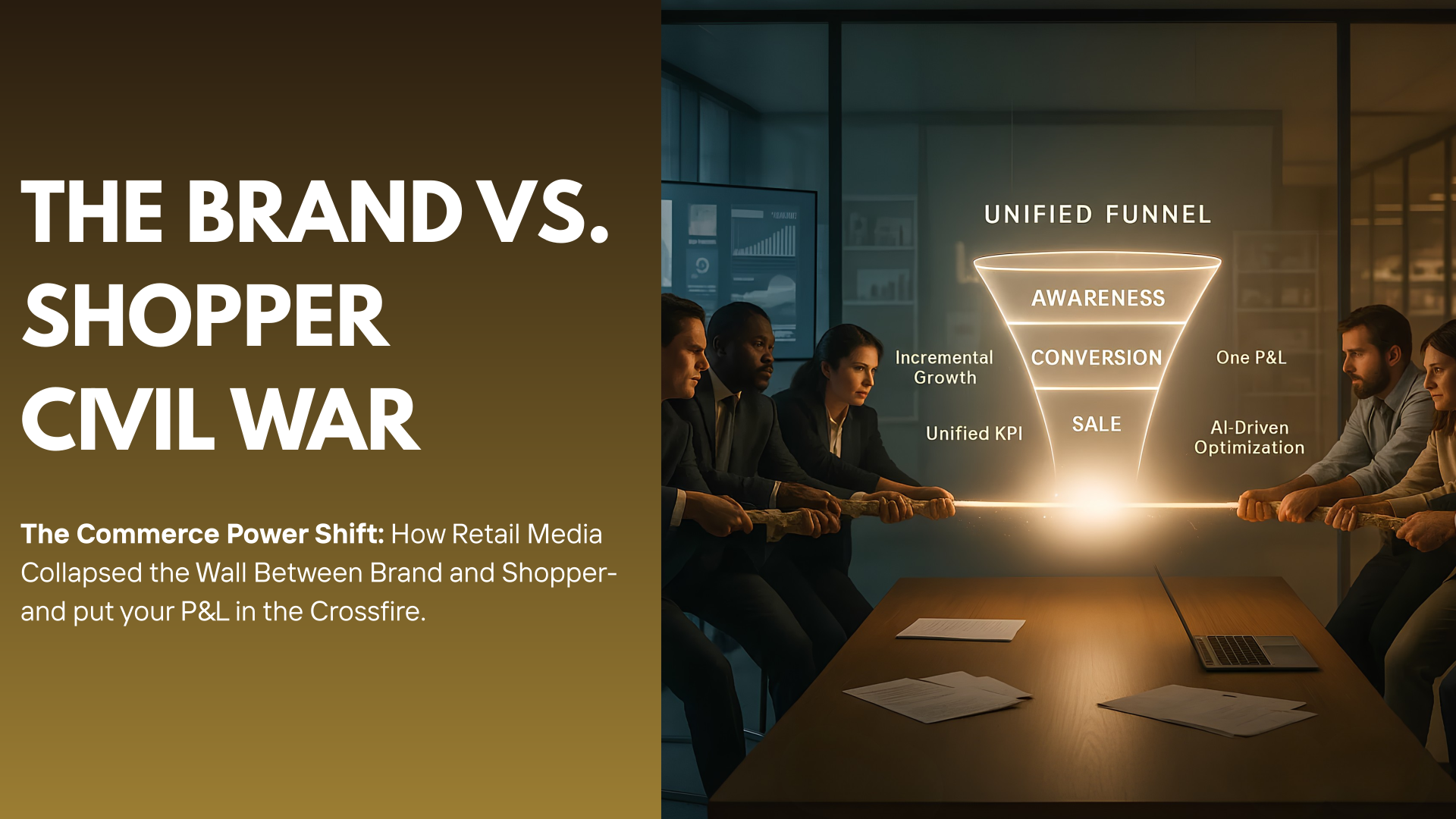
The Mandate: One Leader, One Funnel, One KPI
Brands must end the civil war and redesign the system. The answer is structural, not incremental.
- Create One Unified Leadership Role: Call it a Chief Commerce Officer or Head of Performance. Give this leader full P&L ownership of the entire funnel, from first impression to final sale.
- Set One Unifying KPI: This leader’s single metric should be total incremental growth. Not reach. Not ROAS. Not awareness. Just growth, measured across every signal that matters.
- Deploy One Unified System: The spreadsheets and siloed dashboards of yesterday cannot manage a living, full-funnel budget. You need AI-powered systems that can ingest signals from CTV, search, social, and in-store, then optimize in real time for total business outcomes.
The MediaAMP Take: The Org Chart Is the Next Battlefield
Retail Media Networks have forced this change faster than anyone expected. The brands that adapt will gain speed and efficiency. The ones that resist will burn time and margin in internal politics.
- The Winners: Will unify their teams, merge their budgets, and measure success holistically. They will stop asking whether something is a "brand" or "shopper" investment. They will call it what it really is: a growth investment.
- The Losers: Will keep fighting the old war. They will watch competitors use the same RMNs more effectively, with tighter data and faster feedback loops, while their own budgets compete against each other inside the same organization.
The battlefield is not between brands anymore. It is inside them.
Related Articles
Continue exploring with these hand-picked articles on similar topics