Retail media has had an incredible run. ROAS is up. Budgets have consolidated into a handful of dominant platforms, and operations feel simpler than they have in a long time. The efficiency story looks great on paper.
But there's a question that keeps coming up in finance conversations - and no retailer dashboard has a clean answer for it: if efficiency is improving, why are margins getting worse?
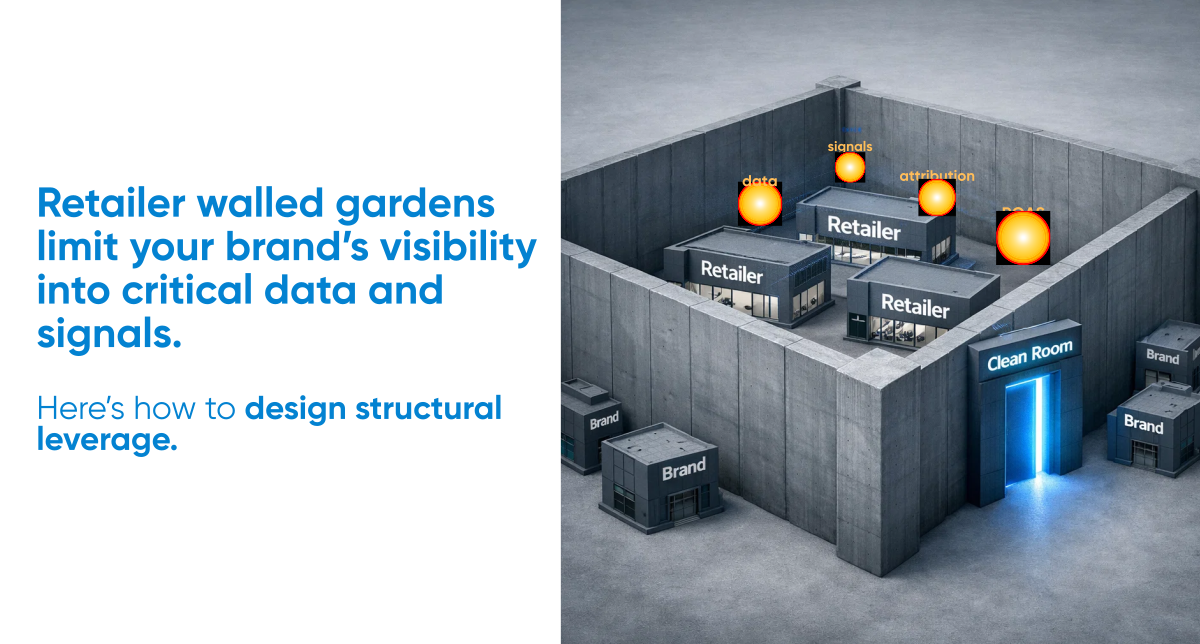
The answer isn't about how much you're spending or how good your creative is. It's about the walled garden model itself - and whether the ecosystems you've consolidated into are actually built to protect your interests, or just their own.
What Walled Gardens Are Actually Built to Do
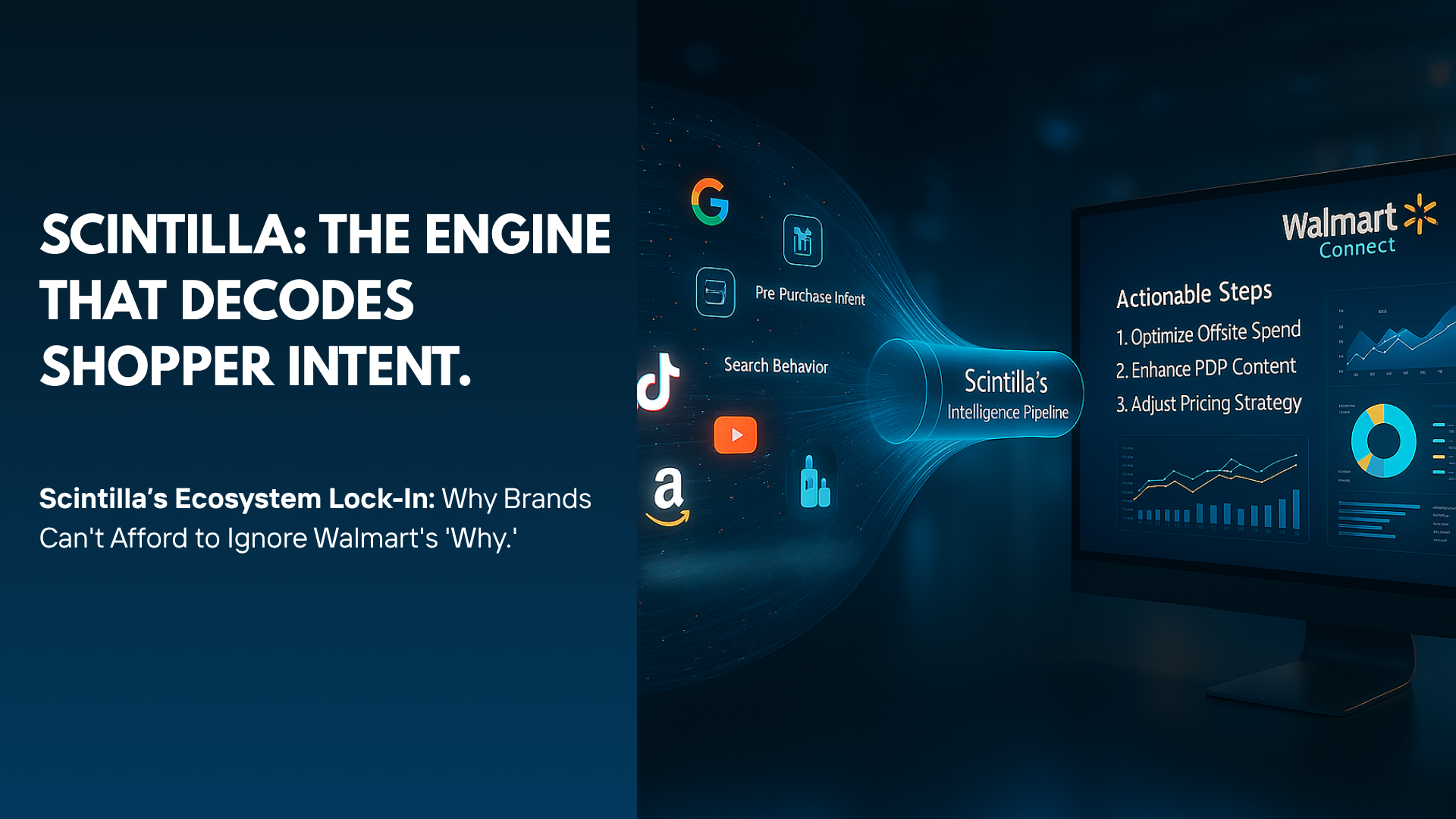
Amazon Marketing Cloud, Walmart Scintilla, Target Roundel - these are genuinely powerful platforms. They give you closed-loop purchase data, privacy-compliant clean rooms, identity matching at scale, and a level of simplicity that becomes more valuable as the open web keeps fragmenting.
When a brand sees 250% ROAS from one platform and 180% from another on the same product in the same week, the confidence that follows makes sense. The data looks clean. The logic holds up. For a lot of brands, getting to this level of measurement inside retailer ecosystems has been the goal for years.
But here's what often gets overlooked: these ecosystems aren't neutral infrastructure. They're commercial environments built by retailers, for retailers. The measurement, the data access, the reporting standards - all of it is shaped by the platform's business model, not yours.
That doesn't make them bad. It makes them interested parties. And when an interested party is also the one grading the results, you need to understand what that structure actually costs you.
The Real Cost of Walled Garden Dependency
The deeper a brand goes into a single walled garden - or even two or three - without independent checks in place, the more exposed it becomes. That exposure shows up in a few specific ways.
Your data stays inside their walls. The customer insights, purchase patterns, and audience signals you generate through your spend accumulate inside platforms that have a commercial interest in how that data gets used and interpreted. You're building intelligence - but you don't fully own it or control it.
Your negotiating power weakens over time. As spend concentrates into fewer ecosystems, retailers gain more leverage over pricing, ad placements, and reporting standards. The more dependent you are, the less room you have to push back.
Their innovation roadmap serves their goals, not yours. Walled gardens invest in features that grow their ad revenue and keep brands locked in. That means limited cross-retail frequency management, restricted data portability, and tools that work beautifully inside the ecosystem but don't connect to anything outside it.
Their measurement tells their story. When the company selling you the media is also the one measuring how well it worked, the numbers are going to lean in their favor. That's not manipulation - it's just the nature of the structure. And if you're making budget decisions based entirely on those numbers, you're optimizing toward a picture that may not reflect what's actually driving growth.
None of this means walled gardens are useless. Their scale is real and their data environments are genuinely valuable. But the model is designed to pull brands deeper in - and the deeper you go without structural safeguards, the harder it becomes to see clearly, move quickly, or protect your margins.
Attribution vs. Incrementality: The Measurement Gap Inside the Walls
One of the most important things to understand about walled garden dependency is how it shapes the way performance gets measured - and how that measurement can quietly mislead you.
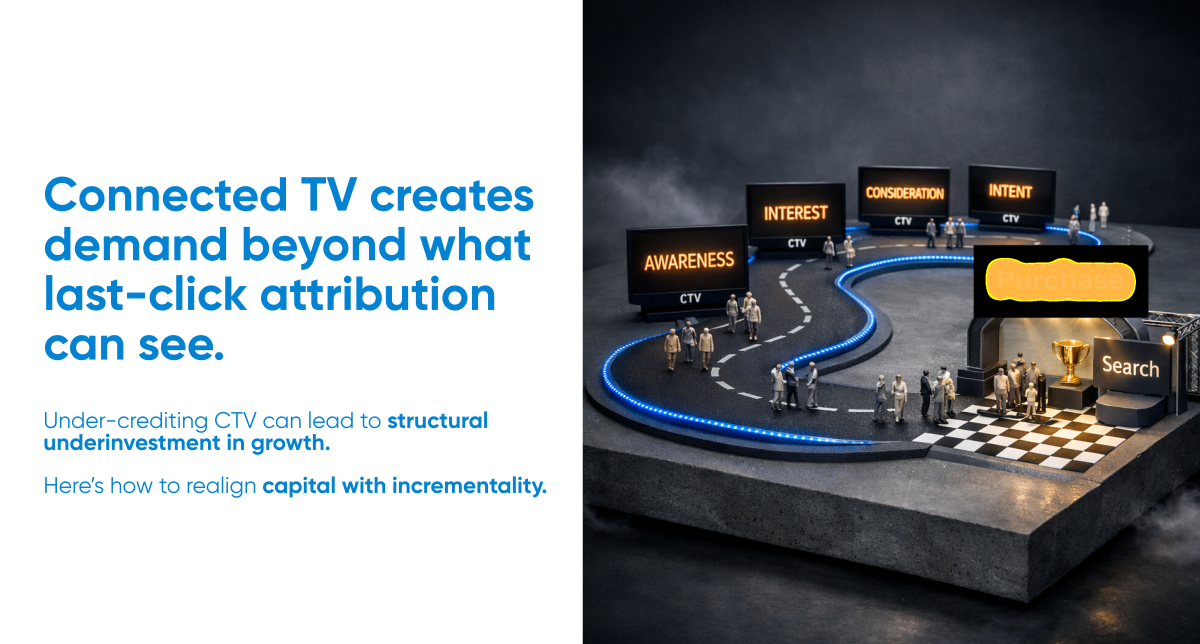
Attribution tracks whether a purchase happened after someone saw an ad. It connects events in sequence. Incrementality asks a harder question: did the ad actually cause the purchase? These are two very different things, and walled gardens are built to answer the first one - not the second.
That gap matters commercially. When brands have run independent geo-holdout tests outside retailer ecosystems, they've consistently found that 30 to 50% of attributed conversions would have happened anyway - with no ad spend at all. In one documented case, more than half of a brand's attributed Amazon sales had no causal link to its media investment.
This is the walled garden measurement problem in its clearest form. The platform reports strong numbers because it's designed to. The brand optimizes toward those numbers because they look good. And over time, budget flows toward platforms that claim the most credit - not necessarily the ones driving real growth.
Attribution answers "did they see an ad and then buy?" Incrementality answers "did they buy because of the ad?" That difference - between "and then" and "because of" - is where your margin actually lives. And inside a walled garden, you'll almost never see it clearly without independent validation.
The Hedged Garden Model: Stay In, But Stay Independent
The answer to walled garden risk isn't walking away from these platforms. It's making sure they don't become the only thing holding your strategy together.
A hedged garden model keeps you active and competitive inside major retailer ecosystems while building real independence alongside that participation. Think of it like diversifying an investment portfolio - you don't exit the market, but you don't put everything into one position either.
In practice, a hedged approach means:
- Owning your data outside closed environments - not letting it pile up entirely inside platforms that have their own commercial interests in how it gets used.
- Using neutral clean rooms for audience matching - environments where neither you nor the retailer controls the output alone, so the insights aren't shaped by one side's business model.
- Validating performance independently - measuring what's actually working through methods that aren't financially tied to the result, instead of relying solely on the platform's own scorecard.
- Activating across retailers and non-endemic channels - so your strategy isn't locked into one or two ecosystems and you have real options if conditions change.
- Keeping enough budget flexibility to move money meaningfully when your own data tells a different story than the dashboard does.
The brands that win long-term in retail media share one discipline: they participate fully inside walled gardens, but they never let a single ecosystem become the only lens through which they see their own performance.
MediaAmp's POV
The Strategic Directive
Retail media should be treated as a portfolio - not a dependency. Being active inside retailer ecosystems is necessary. Letting those ecosystems control your measurement, your data, and your ability to move is a choice - and it's one you can make differently.
The brands that outperform over the long run do a few things consistently: they maintain independent data ownership, they design for portability across ecosystems, they preserve the ability to move capital quickly, and they keep validation mechanisms that no single retailer controls.
High ROAS inside a walled garden, without any independent check on it, isn't performance. It's exposure.
The Advisory Audit
Most brands assume their retail media strategy is working because the platform dashboards say it is. But a walled garden grading its own results is not independent validation - it's the system marking its own homework.
If your growth engine relies mostly on retailer-reported metrics and your data lives primarily inside one or two ecosystems, it may be time to pressure-test the structure behind those numbers. That means asking whether your current model is giving you real independence - or whether you've built a strategy that only looks healthy from inside the walls.
At MediaAmp, we run strategic retail media audits designed to answer exactly that. If you want to evaluate whether your current strategy is truly driving incremental growth or is structurally exposed, reach out to our team - we're happy to help you pressure-test the architecture behind your performance.
The Resilience Factor
We encourage every brand to run a simple thought exercise with their retail media portfolio: what happens if you need to shift budget away from a walled garden - fast?
- What happens if a retailer changes its attribution rules or data access policies overnight?
- What happens if independent testing shows the performance you've been reporting was significantly overstated?
- What happens if margin pressure forces you to reallocate capital quickly - and your data, your insights, and your audience strategy are all locked inside the ecosystem you need to pull back from?
Organizational readiness matters. You need the ability to move spend, shift audiences, and redirect strategy based on what you can independently verify - not just what a platform tells you. This is exactly what our Black Swan Playbook is designed for: helping brands build that structural resilience before disruption forces the issue.
Because resilience isn't something you build during a crisis. It's something you build before one.
Why This Matters More Now Than It Did Two Years Ago
Walled garden dependency tends to build quietly. When ROAS looks strong and operations run smoothly, there's very little incentive to question the structure underneath. The pressure shows up later - when access rules change, when data policies shift, when margins tighten and you need to move fast but everything you've built is locked inside the ecosystem you need to pull back from.
Building independence in retail media is something you have to do ahead of time. The data ownership, the neutral measurement, the portfolio diversification, the decision-making protocols - all of it needs to be in place before the conditions that test them actually arrive.
High ROAS inside a closed ecosystem, with no external check on it, isn't a performance story. It's a risk position that's been mislabeled as one. The brands seeing that distinction early are the ones quietly building the leverage that walled gardens were designed to take away.
Related Articles
Continue exploring with these hand-picked articles on similar topics