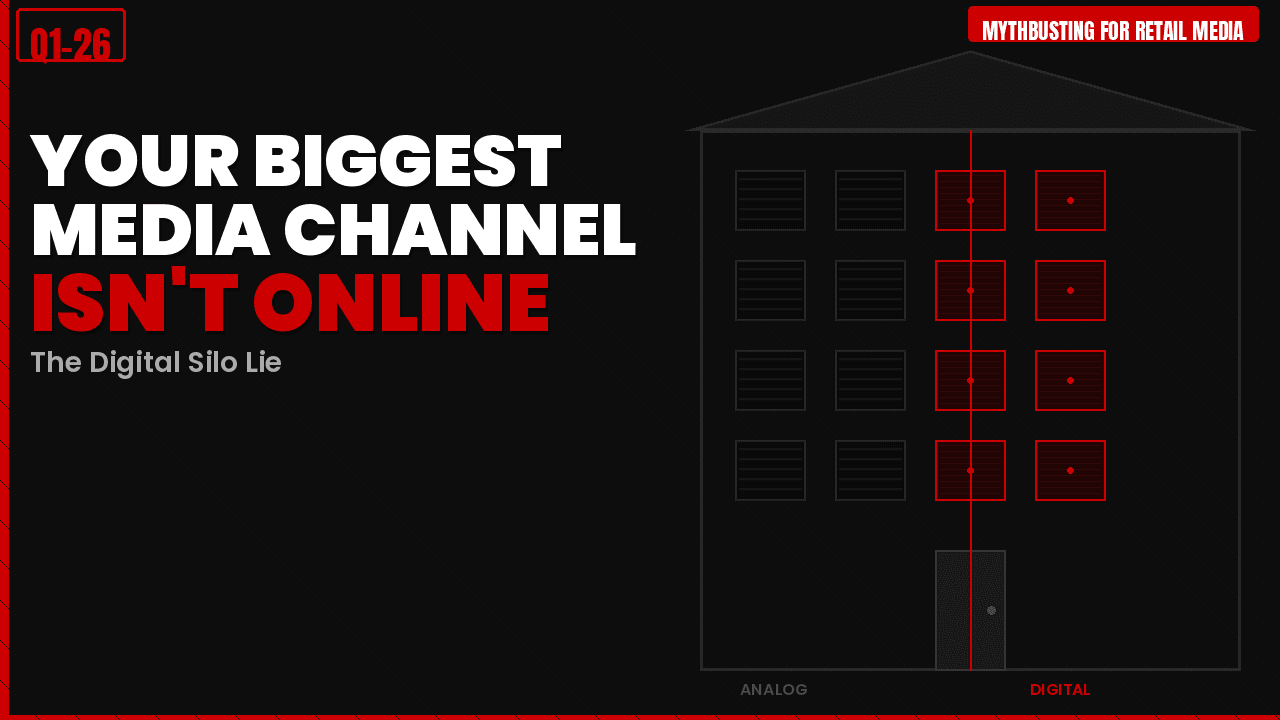
Your Biggest Media Channel Isn't Online - The Digital Silo Lie
Explore why overlooking in-store retail media is one of the most expensive blind spots in marketing and how modern digital retail signage can now be measured, optimized, and integrated into unified three-screen media strategies.
Watch the Full Episode
Dive deep into the insights and discover what really drives growth
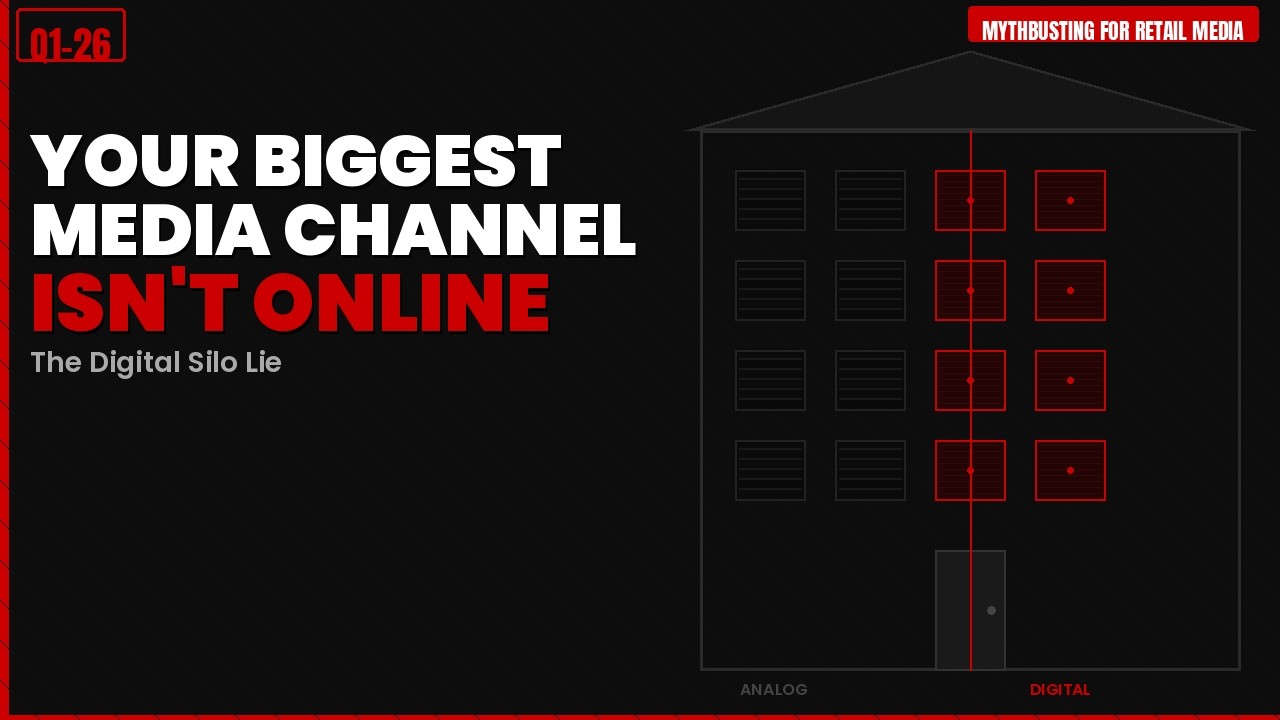
Your Biggest Media Channel Isn't Online - The Digital Silo Lie
Explore why overlooking in-store retail media is one of the most expensive blind spots in marketing and how modern digital retail signage can now be measured, optimized, and integrated into unified three-screen media strategies.
Everything You Need to Know
Go beyond the video with detailed insights, actionable takeaways, and expert analysis.
Executive Summary
In this episode of the Mythbusting Series, we expose a massive blind spot in traditional marketing strategies: ignoring in-store retail media. While most retail budgets focus on online performance channels, roughly 80–85% of actual consumer purchases still occur in physical stores. Historically, physical store media has been treated as a marginal "shopper marketing" expense, siloed away from performance media due to perceived measurement challenges. This episode demolishes that myth and shows how modern in-store digital screens — from dynamic end caps to smart coolers and checkout displays — are now addressable, programmable, and measurable.
The Costly Blind Spot
For too long, retail media strategy has been limited by an outdated view of physical stores as warehouses and offline budgets as "less measurable." While a substantial amount of media spend pours into online channels targeting the 15% of transactions happening digitally, the majority of purchases still happen inside physical stores. The result is a massive imbalance: billions spent on digital while ignoring the 85% of sales that happen in store.
The Modern Store as a Media Channel
The episode challenges the traditional division between retail media and shopper marketing, explaining how modern stores have become fully digitized, programmable environments:
- Digital end caps can dynamically display targeted content based on inventory or shopper behavior.
- Smart cooler doors employ transparent LCD screens to play video ads and even track engagement time.
- Checkout line screens — where shoppers are a captive audience — offer high-impact displays that can influence last-minute purchase decisions with measurable effects.
Measurement Is No Longer a Barrier
Measurement — the classic industry excuse for underinvestment — is no longer valid. The IAB has standardized how in-store media is measured using a two-pillar system: "opportunity to see" (in-store impressions) and closed-loop sales lift. That means marketers can now directly tie in-store media exposure to register sales.
For example, a major CPG brand running ads on cooler screens across 250 Kroger stores saw a 14% lift in sales compared to control stores — proving measurable impact and true incrementality.
The Three-Screen Strategy
With measurement solved, the integrated three-screen strategy connects:
- Awareness on Connected TV — reach consumers at home with brand messaging.
- Reinforcement on mobile devices — retarget and remind on-the-go.
- Conversion in the aisle on in-store screens — close the sale at the moment of decision.
A unified journey like this allows brands to guide the modern path to purchase, from initial discovery to in-store decision moments, with targeted, data-driven content at each touchpoint.
The Bottom Line
Physical retail is not obsolete — it's being transformed into a programmable and measurable media channel. Brands that activate digital in-store media and integrate it into a unified three-screen strategy will outpace competitors and unlock incremental sales that were previously ignored.
"If 85% of sales happen in-store, why does 85% of your media strategy live online? The silo is the problem."
Key Takeaways
Approximately 80–85% of sales still happen in physical stores, yet most media budgets focus on online channels
Modern in-store digital media — such as dynamic end caps, smart coolers, and checkout screens — is measurable and addressable
The IAB's measurement standards enable direct linkage between in-store exposure and sales lift
Case studies show real incrementality from in-store digital media comparable to online channels
A unified three-screen strategy (CTV, mobile, in-store) creates a seamless journey from awareness to purchase
Treating physical retail as a media channel, not just distribution, unlocks one of marketing's biggest overlooked assets
Continue Your Learning Journey
Explore more myth-busting series and uncover the truths that drive sustainable growth

Beyond the 5-Year Lookback: Why Incrementality and Category Growth Drive Real Marketing Impact
Discover why extended historical data windows risk over-emphasizing the past at the expense of what truly matters today: incrementality, category dynamics, and forward-looking growth levers.

Beyond PDP Optimization: Why Price-Pack Architecture is the Real Growth Lever
Discover why no amount of SEO copywriting or keyword targeting can fix a fundamental issue: selling the wrong pack at the wrong price. Learn how Price-Pack Architecture drives both category growth and brand profitability.

Category Momentum > Last-Click Sales
Discover why retail media budgets allocated based on last-click attribution are reactive and starve emerging opportunities. Learn how Category Momentum drives proactive growth strategy.

Creative is the Bottleneck and AI is the Unlock
Discover why the true bottleneck for retail media performance isn't algorithms or budgets, it's creative relevance. Learn how AI enables faster, cheaper, and more adaptive creative pipelines.